Meze Strada – The Most Enjoyable Closed-Back I’ve Heard
Thinking that headphones are something deeply personal… is actually not a cliché at all.
In fact, headphones are more sensitive to human perception than traditional Hi-Fi speakers, and because of that, they’re far more subjective.
With speakers, what you hear depends a lot on the room, reflections, distance, positioning.
With headphones, there is no room. It’s just you, your ears, and the tuning.
And that’s where things get interesting.
Everyone has a different ear shape, a different anatomy, and a different HRTF, basically how your ears shape sound before it reaches your brain.
On top of that, headphones depend on fit and seal, and even a small change in positioning can completely alter the sound, especially the bass.
So what you hear… is not always what I hear.
And that’s why headphones are, by nature, extremely subjective.
As a reviewer, I receive a lot of products, especially headphones. Some are good, some are excellent, and some are simply not for me. And yes, I’ve reviewed products in the past that I didn’t personally enjoy. That’s part of the job.
But does that make them bad? Not necessarily.
Today’s market is so competitive that releasing a truly bad product, or something with poor value for money, is basically like shooting yourself in the foot.
So we need to define what “bad” really means.
For me, tuning is subjective. Too bright, too warm, too colored, that’s not bad, that’s just taste.
What is bad is something else: build quality issues, poor reliability, bad comfort, inconsistencies. Those are real problems. Sound signature? That’s preference.
So why am I telling you this?
Because after finishing my review of the Strada, I notices something interesting, it received very mixed opinions from reviewers around the world.
But for me…
it was a completely different story.
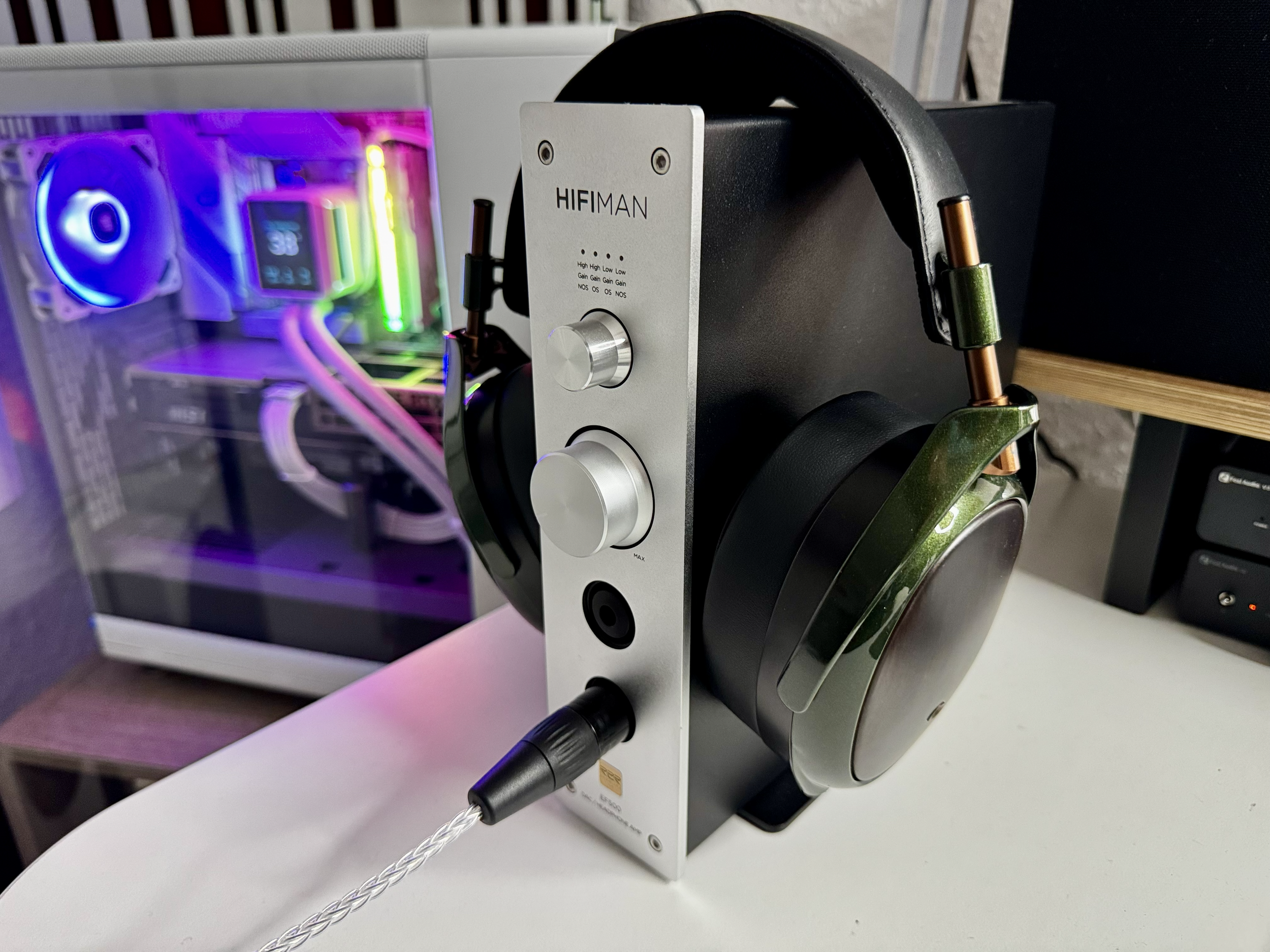
From the very first moment I put them on, my brain just clicked with them. It was like everything aligned instantly with their wavelength, and I immediately felt: ok, this deserves a full review.
And that’s the beauty of this hobby. Somewhere else in the world, there’s probably another reviewer who thinks the exact opposite of me and that’s perfectly fine.
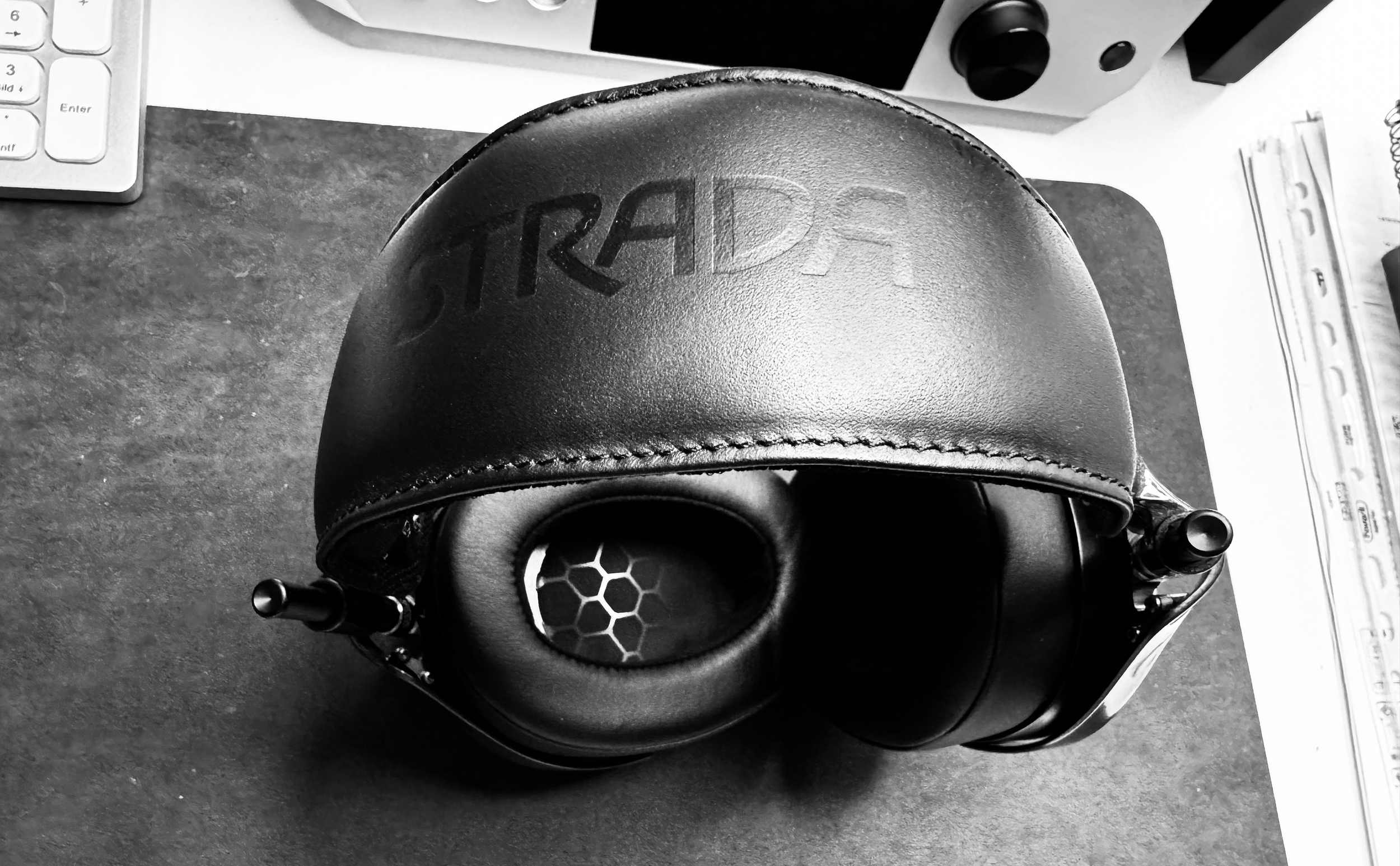
Build, Design & Comfort
Build quality is, as usual with Meze, absolutely top-tier, and honestly, I still consider them among the very best in the industry when it comes to craftsmanship and premium feel.
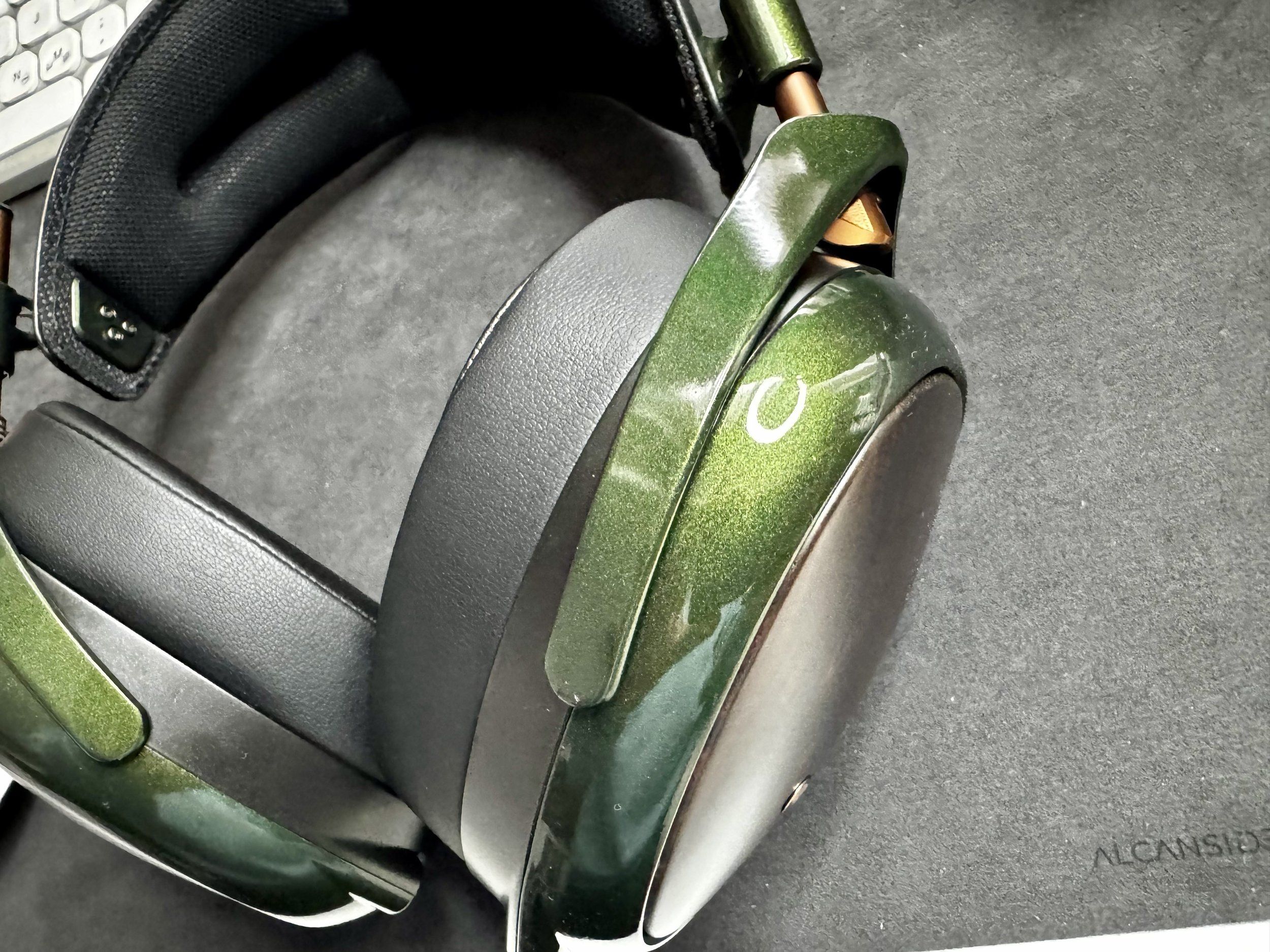
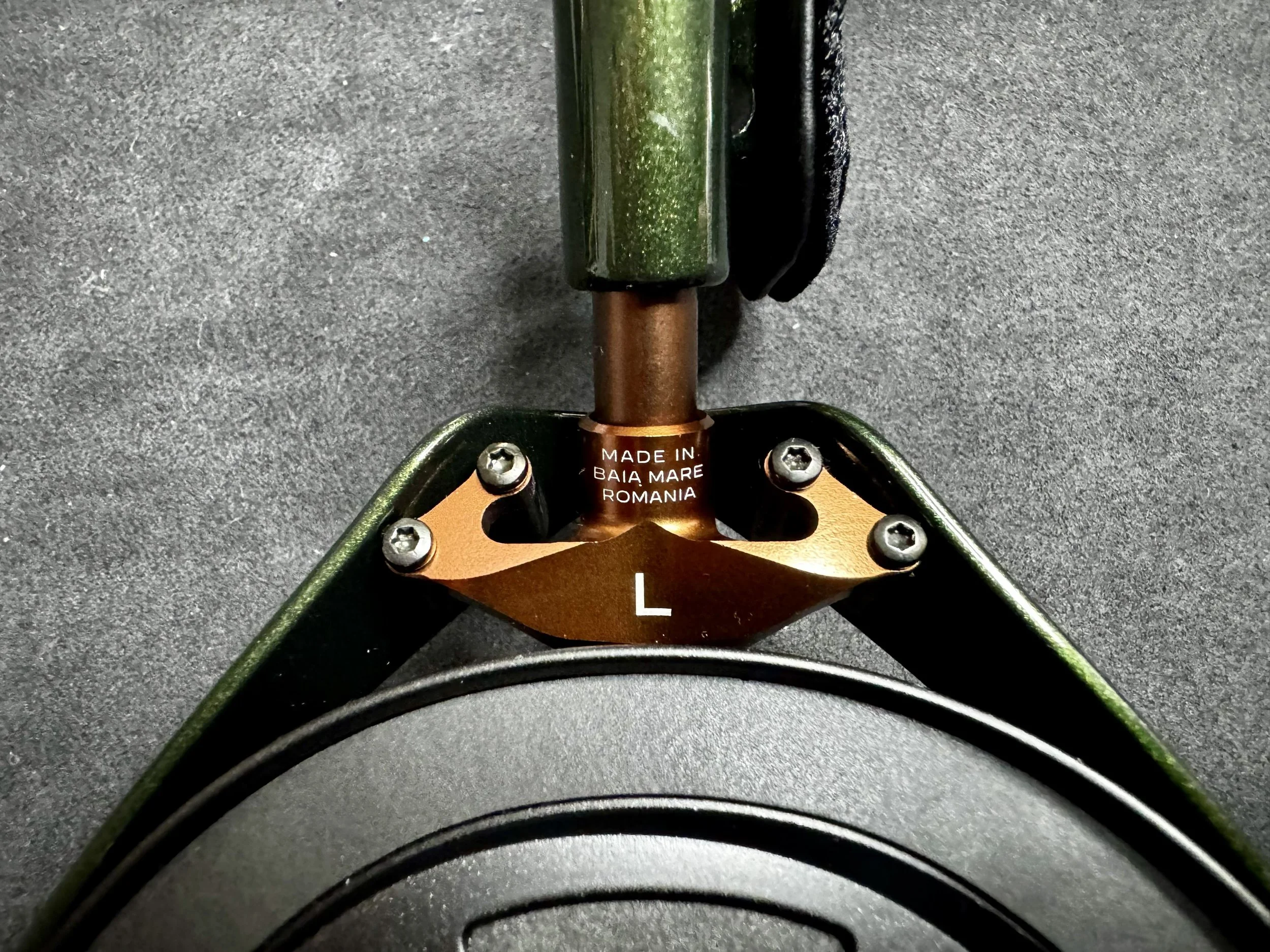
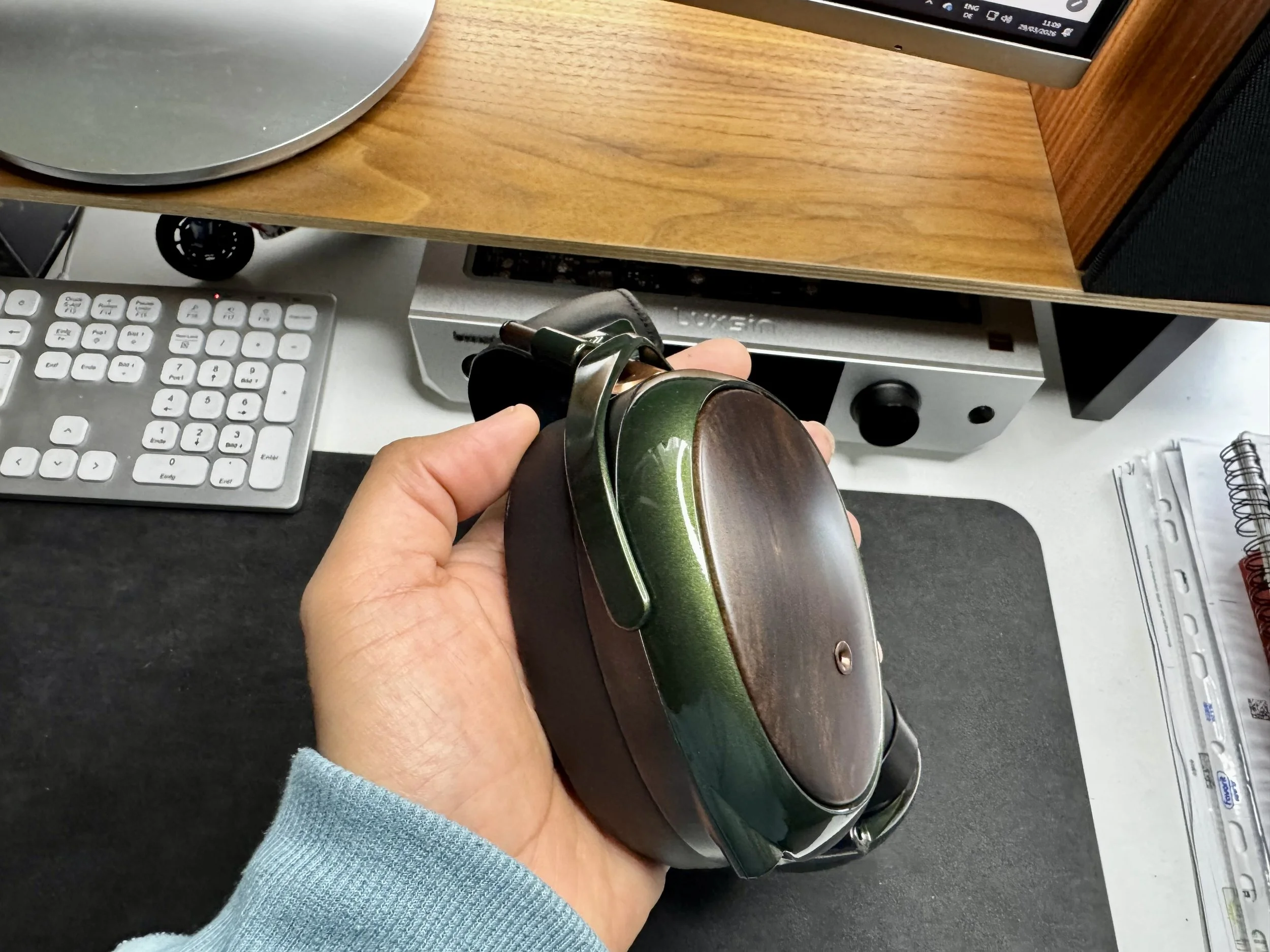
The Strada uses a combination of high-quality materials, including a solid magnesium frame and beautifully finished earcups, all brought together with Meze’s signature attention to detail, and every joint, every movement feels precise, solid, and built to last.
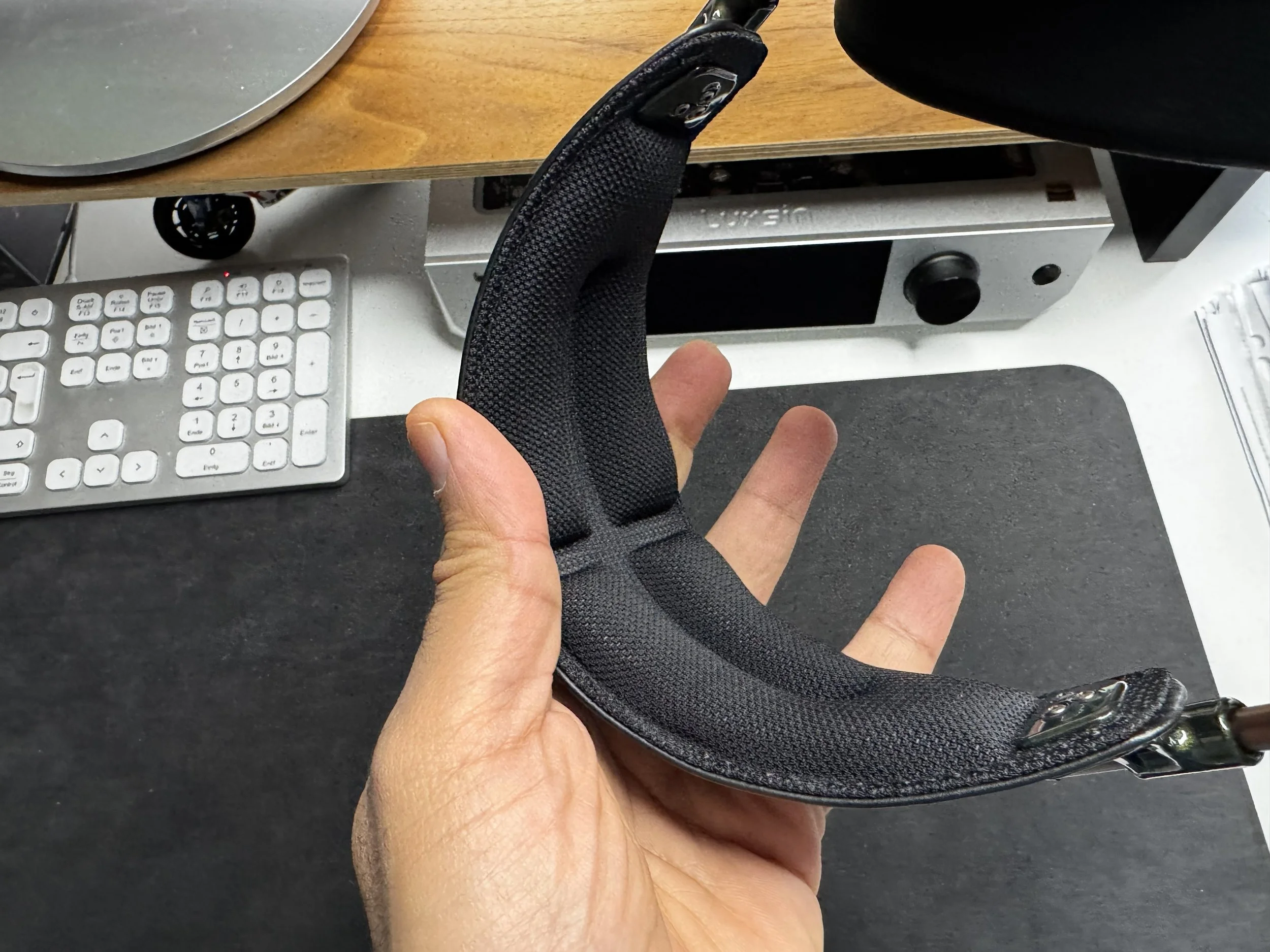
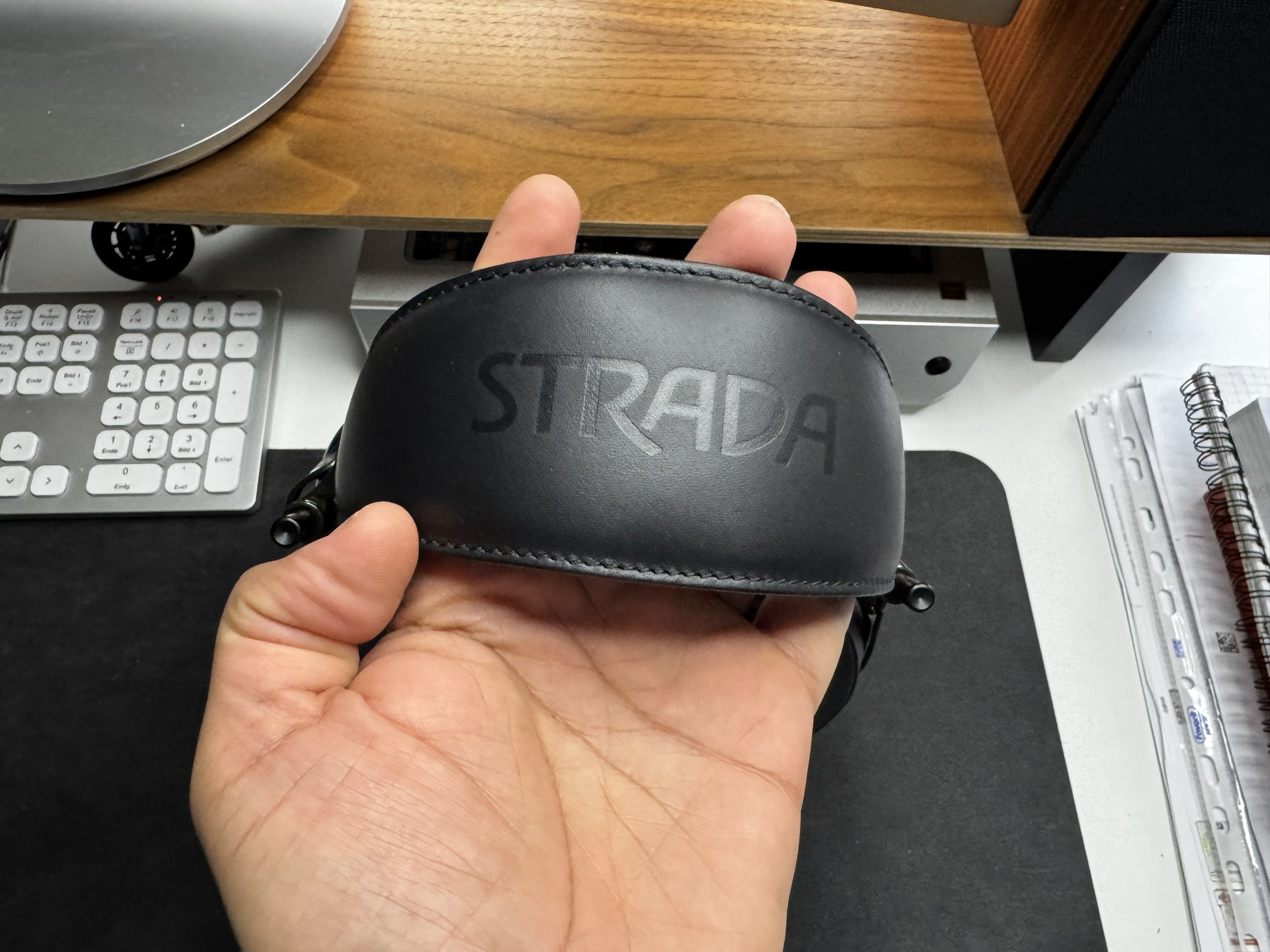
The headband system is excellent, very well balanced and designed to distribute weight evenly across the head, and speaking of weight, these are surprisingly light for what they offer, which makes long listening sessions effortless.
One thing I really appreciate on the Strada is the headband mechanism, because unlike the Classic V2, it doesn’t use a spring system, and that makes a noticeable difference in daily use, as it’s completely silent when you move your head, something that slightly bothered me on the Classic, while here everything feels smoother, more refined, and better executed overall.
Now, the color is more subjective, it’s definitely unique, and this green and brown combination always gives off a very “forest” kind of vibe, but personally, I would have loved to see an all-black version as well, something similar to what Meze did with the Liric V1, and hopefully that’s something they consider in the future.
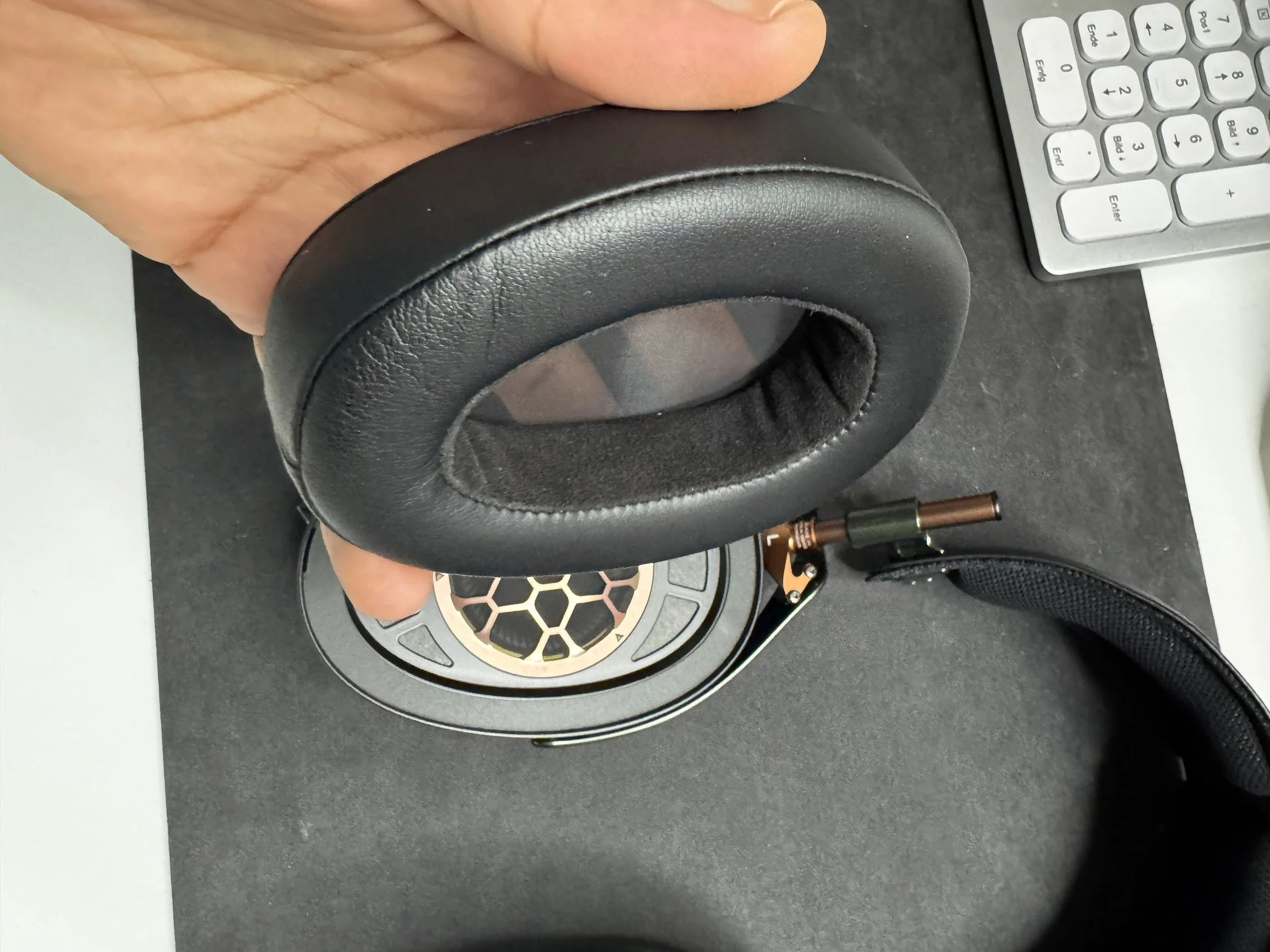
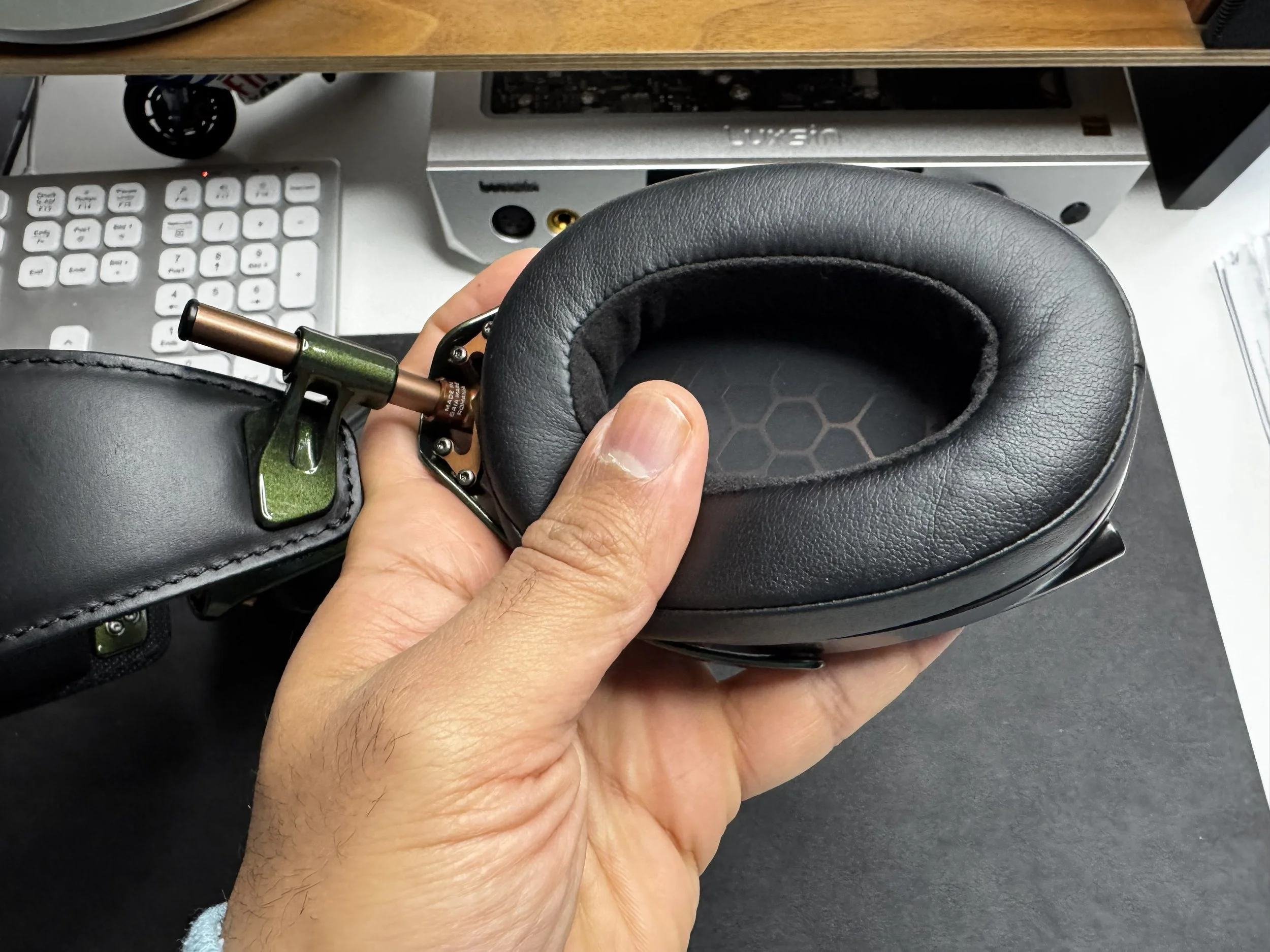
In terms of comfort, overall it’s very good, but not perfect for everyone in my opinion, as the earcup space is not as large as on something like HiFiMAN headphones, and I personally found it slightly on the smaller side, again, very subjective.
The pads are made of synthetic leather rather than fabric, which gives them a premium feel, but during longer sessions, especially in warmer conditions, they can get a bit warm.
The Strada also features a very clever magnetic ear pad mounting system, which improves serviceability and makes pad swapping quick and easy, without compromising the seal.
And speaking of seal, it’s important, because I noticed that bass performance can drops quite noticeably, so you need to position them properly to avoid any leakage, but once you do, the low-end comes back exactly as intended.
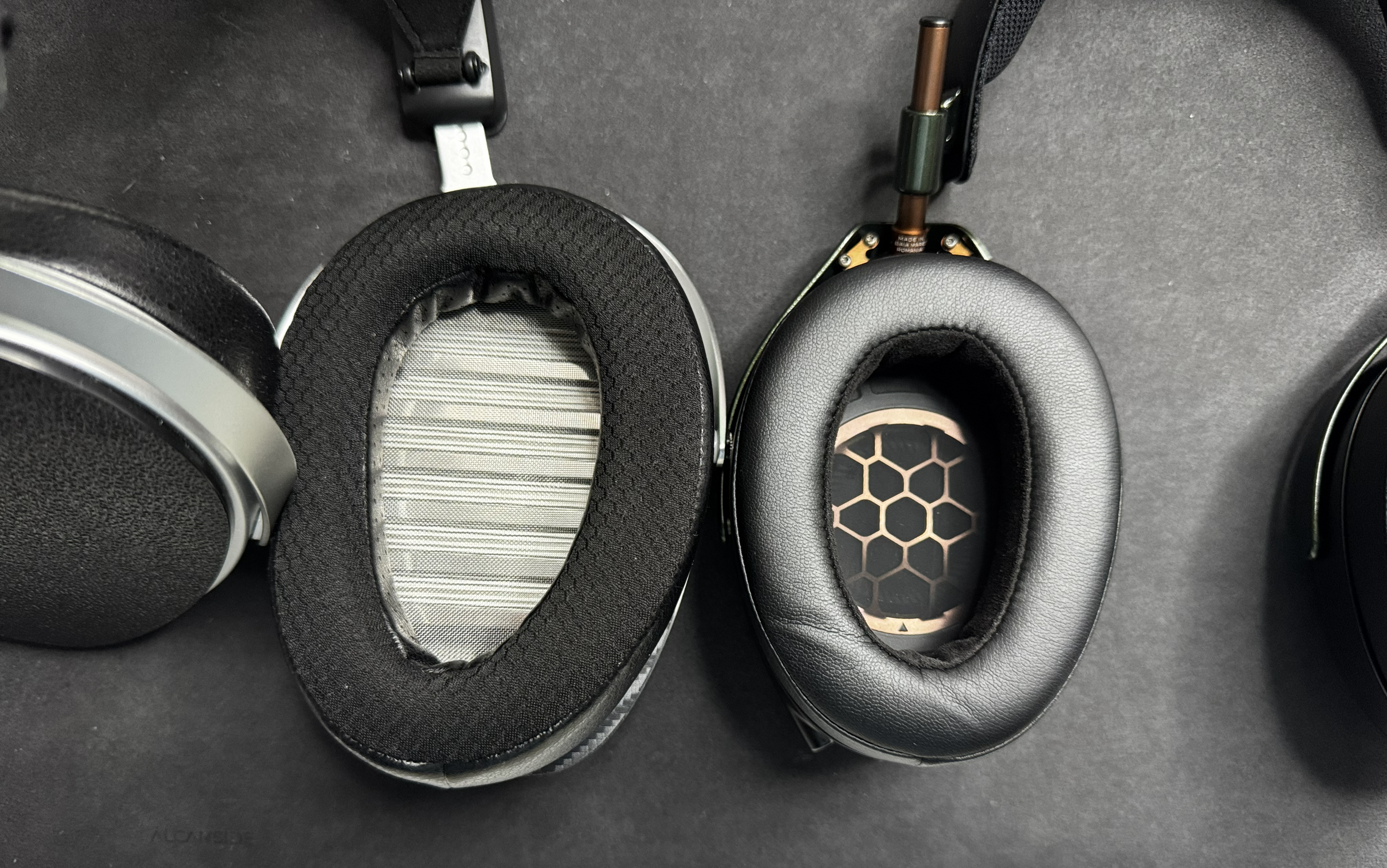
Comparison of ear pad sizes between the HiFiMAN Ananda Unveiled and the Meze Strada, highlighting the difference in ear cup space and fit.
Specs & Driveability
Looking at the specs, the Strada follows the typical Meze philosophy: easy to drive, very accessible.
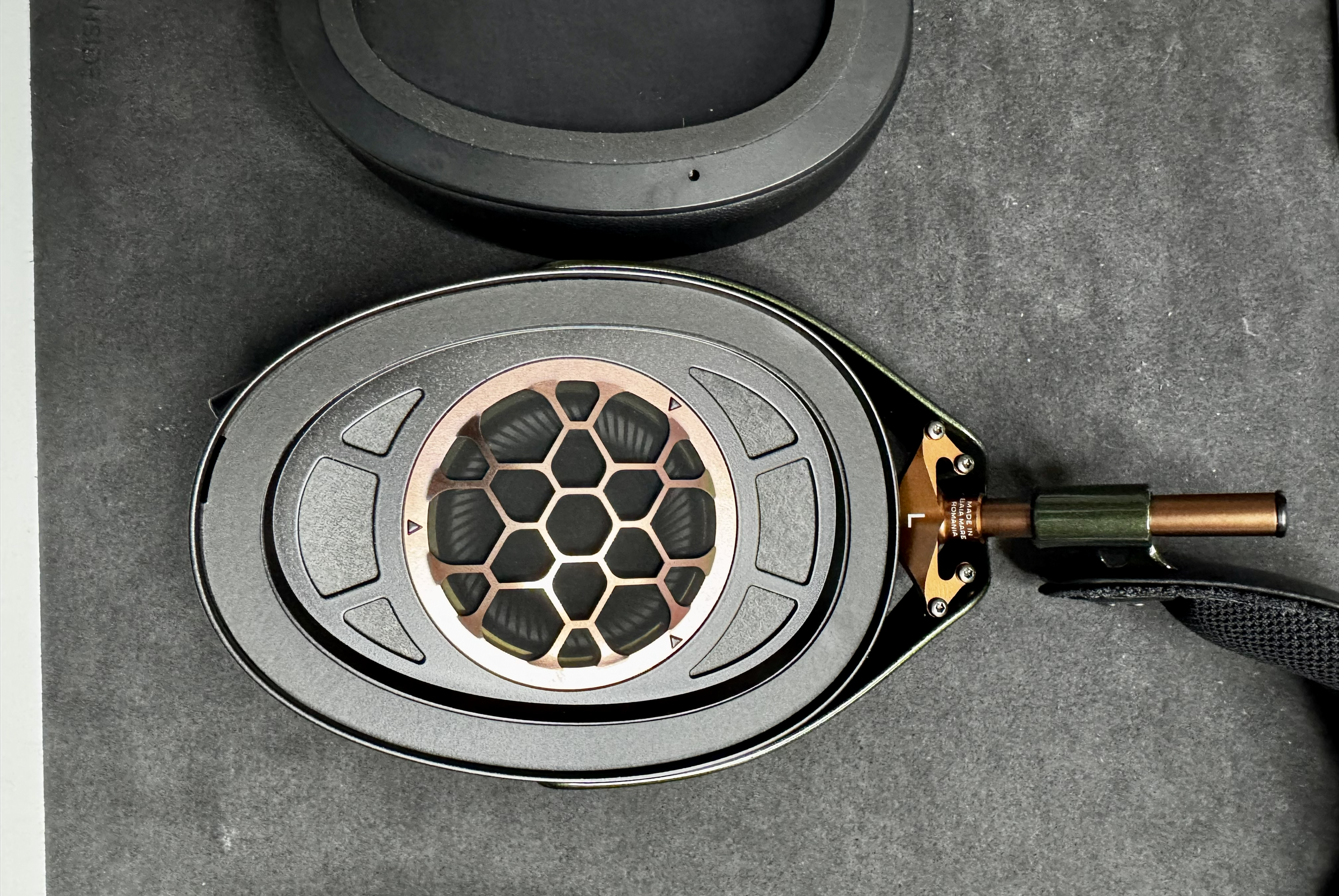
At the core of the Strada is the dynamic driver first introduced in the 109 Pro. It features a dome made from a carbon fiber, reinforced cellulose composite, paired with a torus constructed from a beryllium-coated semicrystalline polymer.
Thanks to the beryllium coating, applied through a PVD process, the driver achieves higher stiffness and durability while remaining lightweight, resulting in a fast and responsive transient performance.
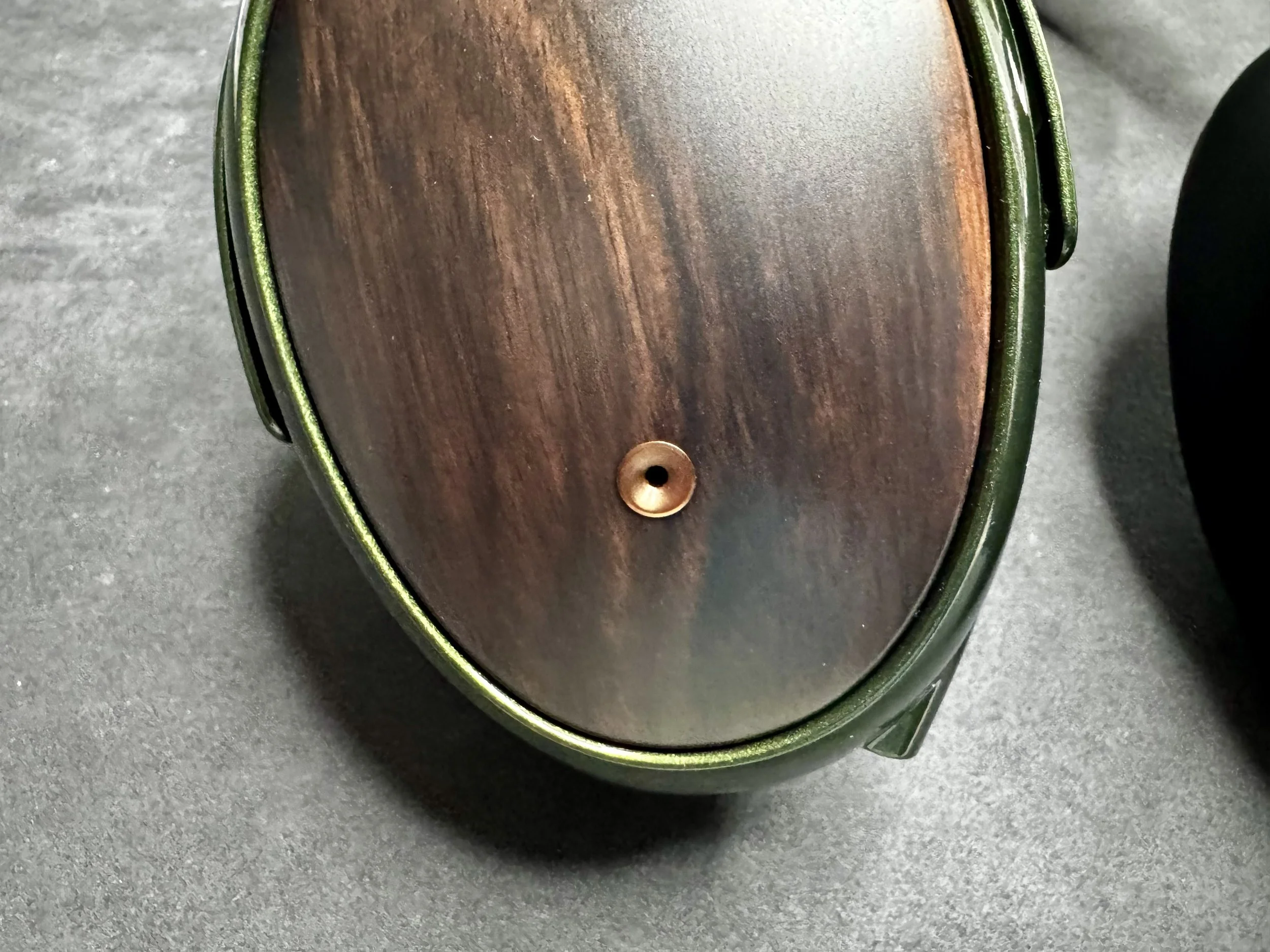
One interesting detail is the small circular opening you can see on the outside of the earcup, which acts as a pressure relief system. Like the Liric, the Strada uses a vented design.
If you try to cover it with your fingers, the external isolation doesn’t really change much, I’d say almost not at all and on many tracks, you won’t notice a big difference.
But as soon as you play something with strong sub-bass content, like Mamoko Gill – Rewind/Remind, and you block that opening, the bass almost disappears completely.
Very cool implementation, and it really shows how much that vent contributes to the overall tuning.
Driver Type Dynamic
Input Connector Dual 3.5 mm TS Jack
Driver Size 50 mm
Total Harmonic Distortion <0.1% at 1 kHz
Frequency Range 5 Hz - 30 kHz
Ear Cup Covers Macassar Ebony Wood
Impedance 40 Ω
Frame Magnesium
Sensitivity 111 dB SPL/mW at 1 kHz
Weight 330 g (11.64 oz)
You don’t need a powerful desktop setup to enjoy them. I even tested them with a small portable amp like the Fosi MD3, and it worked surprisingly well.
Of course, scaling is still there. With something like the HiFiMAN EF500 or the Luxsin X8, you get better control, more dynamics, and a bit more refinement, but overall, these are not demanding headphones at all.
Sound Quality
The first thing that immediately stood out to me is that… these don’t sound like closed-back headphones.
The presentation is open, spacious, and surprisingly wide. There’s a real sense of air and space that you normally don’t expect from a closed design.
The soundstage is large, immersive, and full of life, it has this “vibe” that just pulls you into the music.
And that’s really the key word here: enjoyment.
These are not headphones that try to impress you with extreme detail or analytical precision. Instead, they make you want to listen to music.
No matter the genre, classical, orchestral, hip-hop, Jazz, EDM, everything just works.
Vocals and instruments are presented in a big, full, almost physical way. There’s weight, presence, and a very natural sense of body.
Take something like Kenny Burrell – Midnight Blue:
the sax is warm and rich, cymbals are smooth and buttery, and the percussion feels tactile, almost like you can feel the skin of the drum.
Or orchestral pieces like John Williams, big themes, large scale recordings, the Strada just opens up and lets everything breathe. It’s engaging, emotional, and immersive.
The sub-bass extension is excellent, deep, controlled, and satisfying without ever becoming overwhelming.
Yes, there is some coloration in the midrange, but it’s done in a way that still preserves a natural timbre. It doesn’t feel artificial, just slightly enhanced for musicality.
The bass is punchy and fast, never bloated.
In the treble, there’s an interesting character. It’s refined, smooth, and never aggressive, so you can listen for hours without fatigue. At the same time, it’s not hyper-detailed, instead, there’s a slight “glare” that gives it a sparkling, slightly shiny presentation. It adds energy and excitement to the sound, without ever becoming harsh or overwhelming.
Imaging is precise, timbre is convincing, and overall the presentation just feels… right.
This is one of those headphones that genuinely makes you want to go back home, put them on, and just enjoy music.
And at the end of the day, that’s what matters most.
Measurements
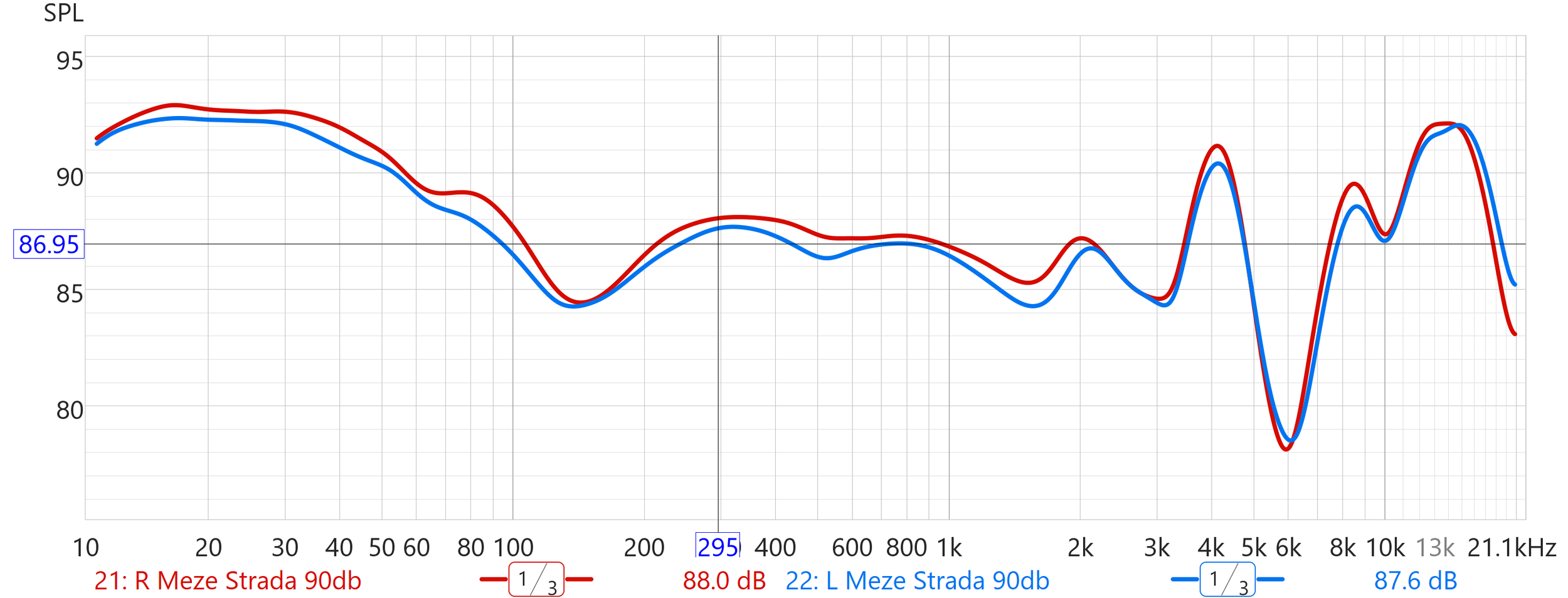
All measurements were performed using a miniDSP EARS rig, with HEQ calibration and headphone compensation applied to approximate a flat target.
It’s important to note that this is not a professional-grade measurement setup, and results should be interpreted with caution. The goal here is not absolute accuracy, but rather to provide a general reference point that can help support subjective impressions.
Looking at the frequency response, the Strada is clearly not tuned to be flat. Instead, it follows a more musical approach, with a noticeable bass elevation that adds weight and engagement, combined with a slightly relaxed midrange that avoids harshness and keeps the presentation easy to listen to.
In the treble, the response shows an interesting balance: there is a dip in the lower treble region, which helps reduce fatigue, followed by some energy in the upper treble that adds a sense of air and sparkle. This aligns well with the listening experience, where the sound comes across as lively and engaging, but never aggressive.
Channel matching is overall very good, with only minor deviations that are well within normal tolerances.
Overall, the measurements confirm what is heard: this is not a neutral or reference tuning, but a carefully shaped response designed for musical enjoyment rather than strict accuracy.
Comparison
I’ve tested the Meze Liric, but only the first generation, not the second. So just to be clear, this is not a direct side-by-side comparison, it’s based on my memory and overall experience with both.
From what I remember, the Liric is the more technical headphone. It has a more analytical presentation and focuses more on precision and detail.
The Strada, on the other hand, goes in a different direction. It’s less technical, but more enjoyable to listen to. It sounds more engaging, more musical, and importantly, much more forgiving when it comes to recording quality.
That’s actually a big advantage. The Strada doesn’t punish poor recordings, you can listen to almost anything and still enjoy the experience. The Liric, in comparison, felt a bit more demanding. It required better recordings and a more careful chain to really shine.

Conclusion
So the Strada just feels easier to live with. It’s less about analyzing or being perfectly faithful to the recording, and more about enjoying the music and having fun, without ever sounding boring, while still keeping a convincing and natural presentation.
It’s one of those rare headphones that strikes a really nice balance between musicality and technical ability, and most importantly, it makes you want to listen longer.
And honestly, for me, this is one of the best closed-back headphones I’ve heard under 1000 euros. I can absolutely recommend it. It’s a stunning headphone and a very complete package.
Meze, well done.
Pros
Excellent build quality and premium materials, typical Meze craftsmanship
Lightweight and very comfortable headband design
Easy to drive, works well even with small portable amps
Spacious, open sound for a closed-back headphone
Very engaging and musical tuning, works with all genres
Punchy, controlled bass with great sub-bass extension
Natural timbre with full-bodied vocals and instruments
Forgiving with recording quality, easy to enjoy any track
Smooth, refined treble with a pleasant sparkle
Overall a very “fun” yet still mature listening experience
Cons
Earcups are slightly on the smaller side, may not suit everyone
Synthetic leather pads can get warm during long sessions
Design/color might be too bold or specific for some tastes