Best Vertical Headphone Amp? EF499 vs EF500 vs EF600
It is not very common and this is probably the first time on the channel that I am reviewing vertical headphone amplifiers. As always my goal is to give you clear and practical options so you can choose the amplifier that best matches your headphones your listening habits and your system requirements.
The vertical design is not just about aesthetics and it is a space efficient form factor that significantly reduces desk footprint compared to traditional desktop amplifiers and it also allows for a different internal layout with different separation between signal paths power sections and thermal management. Despite these possible potential advantages very few manufacturers have explored this concept in the headphone amplifier space.
In this review I will analyze three vertical headphone amplifiers from a well known and established brand covering different price points and performance levels. We will look at circuit design DAC architecture power delivery measured performance and real world headphone pairing including demanding planar magnetic headphones and I will also compare them directly to my reference headphone amplifier the Luxsin X9 so you can clearly understand where they stand against a familiar benchmark.
Design and Build Quality
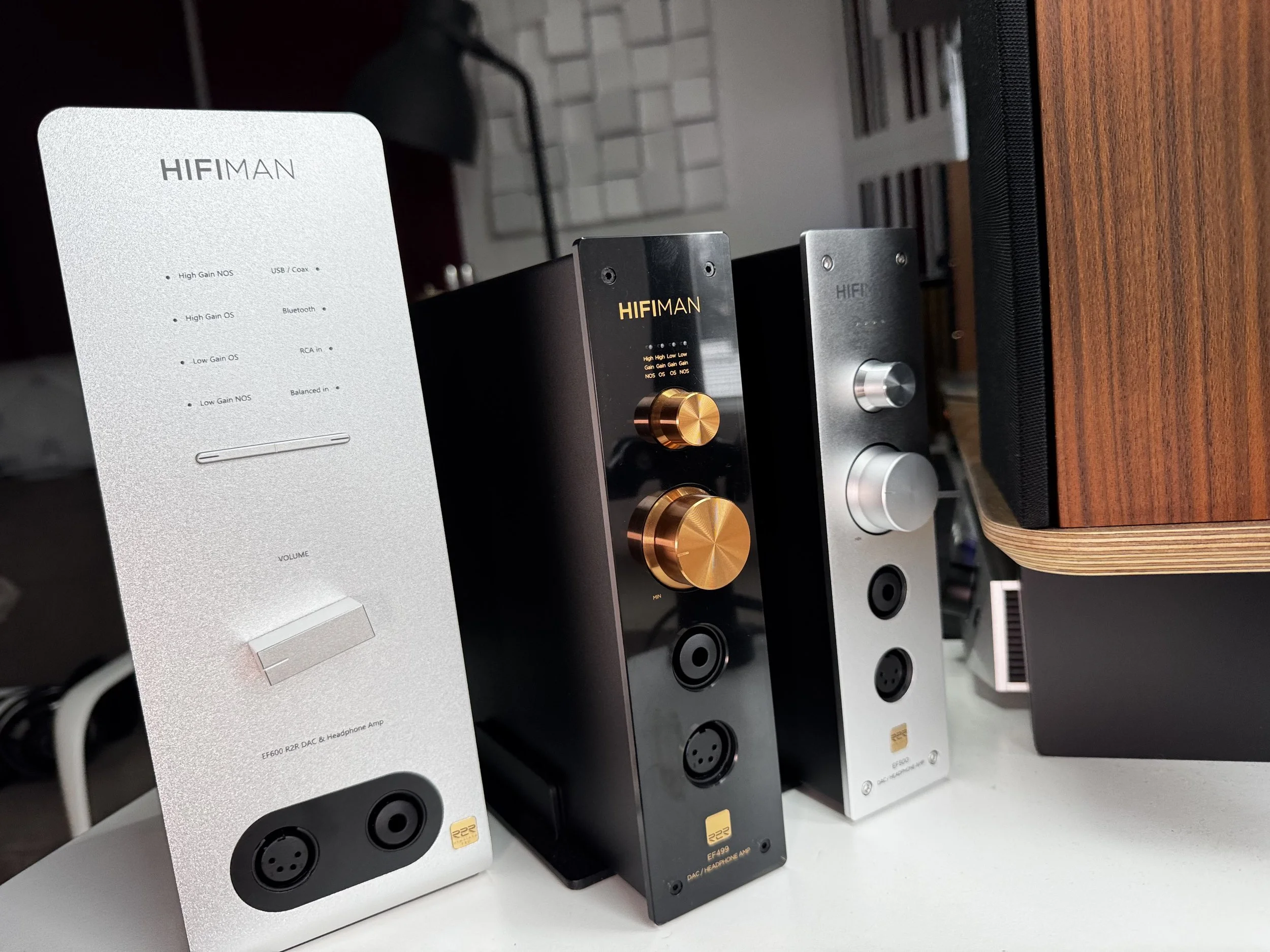
Starting with design and build quality all three units are beautifully made and they clearly look and feel premium. This is not just about aesthetics but also about construction solidity finish quality and attention to detail and you notice it immediately once they are on the desk.
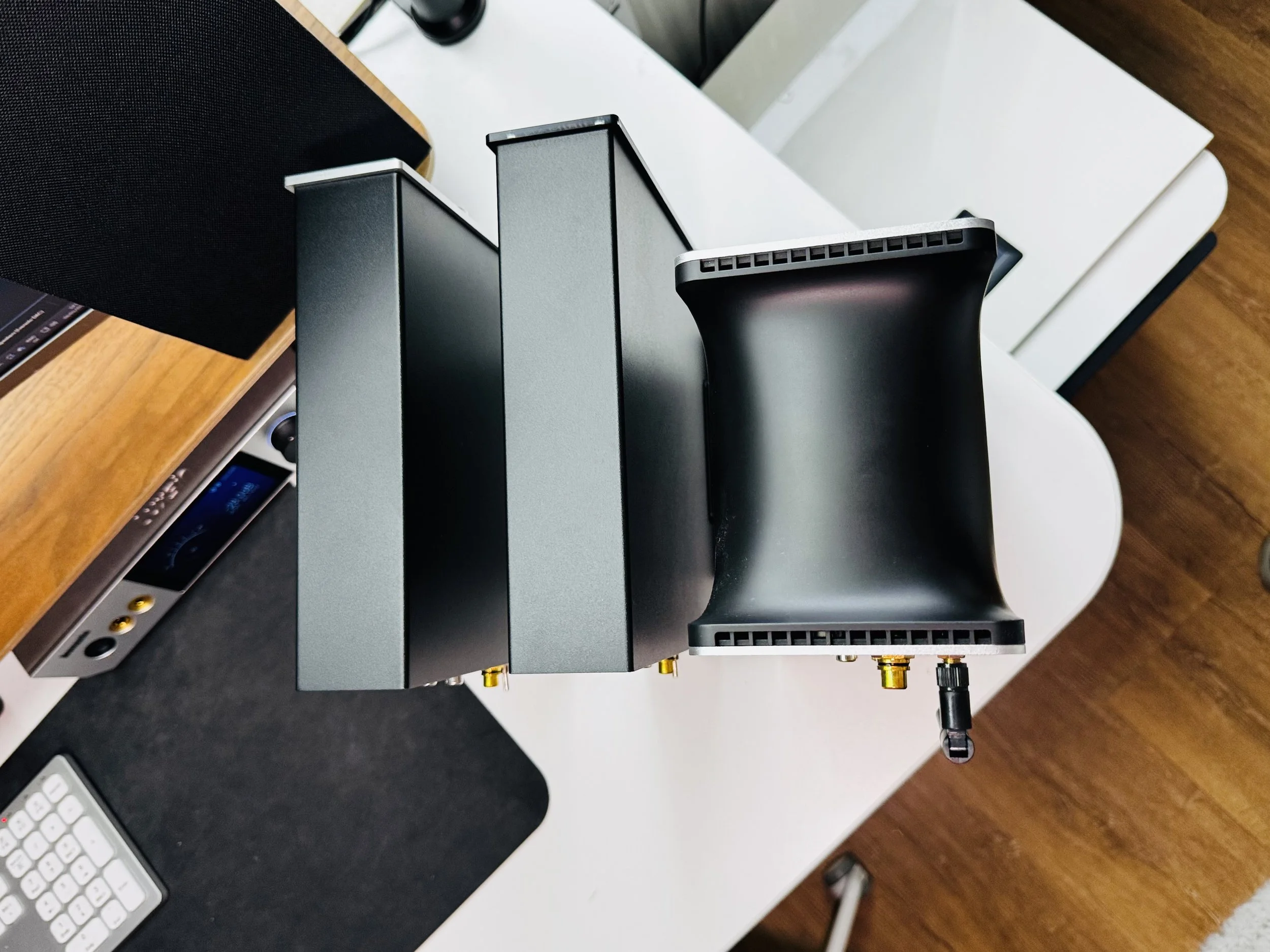
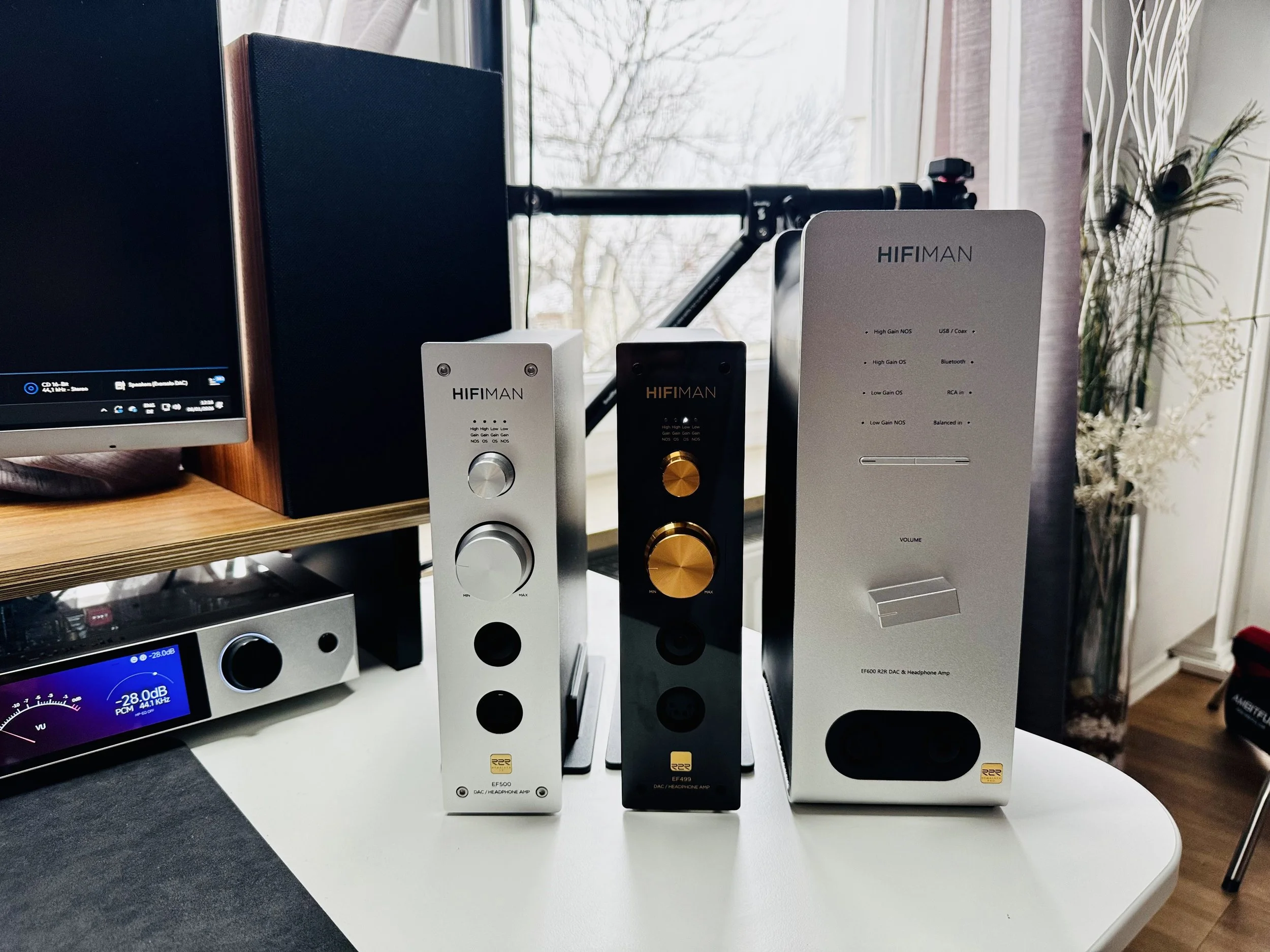
The EF600 is slightly bigger and more imposing and it sits one step above in terms of physical presence. The chassis is taller and wider and more visually dominant and this also matches its higher output power more complex internal architecture and expanded connectivity.
The EF499 and EF500 share the same overall design language proportions and vertical layout but they do not use the same materials and that is an important distinction. While the external form factor looks very similar the EF500 uses a more refined and higher grade material selection compared to the EF499 and you can feel it in the rigidity and in the overall perceived quality when you interact with the unit.
The reason is simple and it makes sense from both a cost and positioning perspective. The EF499 is designed as a more accessible entry point into this vertical R two R ecosystem and material choices help keep the price under control. The EF500 sits clearly above it and bridges the gap toward the EF600 offering upgraded internal components better measured performance and a more premium physical execution without fully stepping into flagship territory.
What I really appreciate is that despite these differences all three models maintain a consistent industrial design identity. They look coherent as a family and they integrate very well into a modern desktop setup and they also save a significant amount of space compared to traditional horizontal headphone amplifiers.
I/O and User Interface
Moving on to I/O and user interface all three units follow the same core philosophy and that is simplicity clarity and direct access to the most important functions. The vertical layout works well in practice and everything is positioned logically on the front panel.
Starting with the front controls all three models use a large central volume knob which feels solid well damped and sufficiently precise in use. On the EF600 the volume knob has a small amount of play and starting from zero volume I was initially hearing sound only from the left channel. As soon as you turn the knob slightly up channel balance becomes correct again and from that point on it behaves normally. With the knob at around ten to fifteen percent the volume is already very loud which clearly shows how much gain and power this unit offers.
The EF499 and EF500 use a fully rotary volume knob instead of the rectangular design found on the EF600. These knobs are stiffer and a bit harder to turn which makes them still enjoyable to use and perfectly functional in daily operation.
On the front panel all three units offer both single ended and balanced headphone outputs. Unfortunately none of them includes a Pentaconn 4.4 mm output and especially on the EF600 this is something I would have liked to see given its price and positioning.
Input selection gain and operating modes are handled differently across the range. On the EF600 everything is managed through a selector system that is intuitive easy to understand and quick to use. On the EF499 and EF500 these functions are handled via a rotary control which allows switching between inputs and DAC operating modes.
Indicator feedback is clear in terms of functionality but the indicators themselves are quite small and can be hard to read from a normal listening distance. I would personally prefer slightly larger indicators although maybe it is just me getting older.
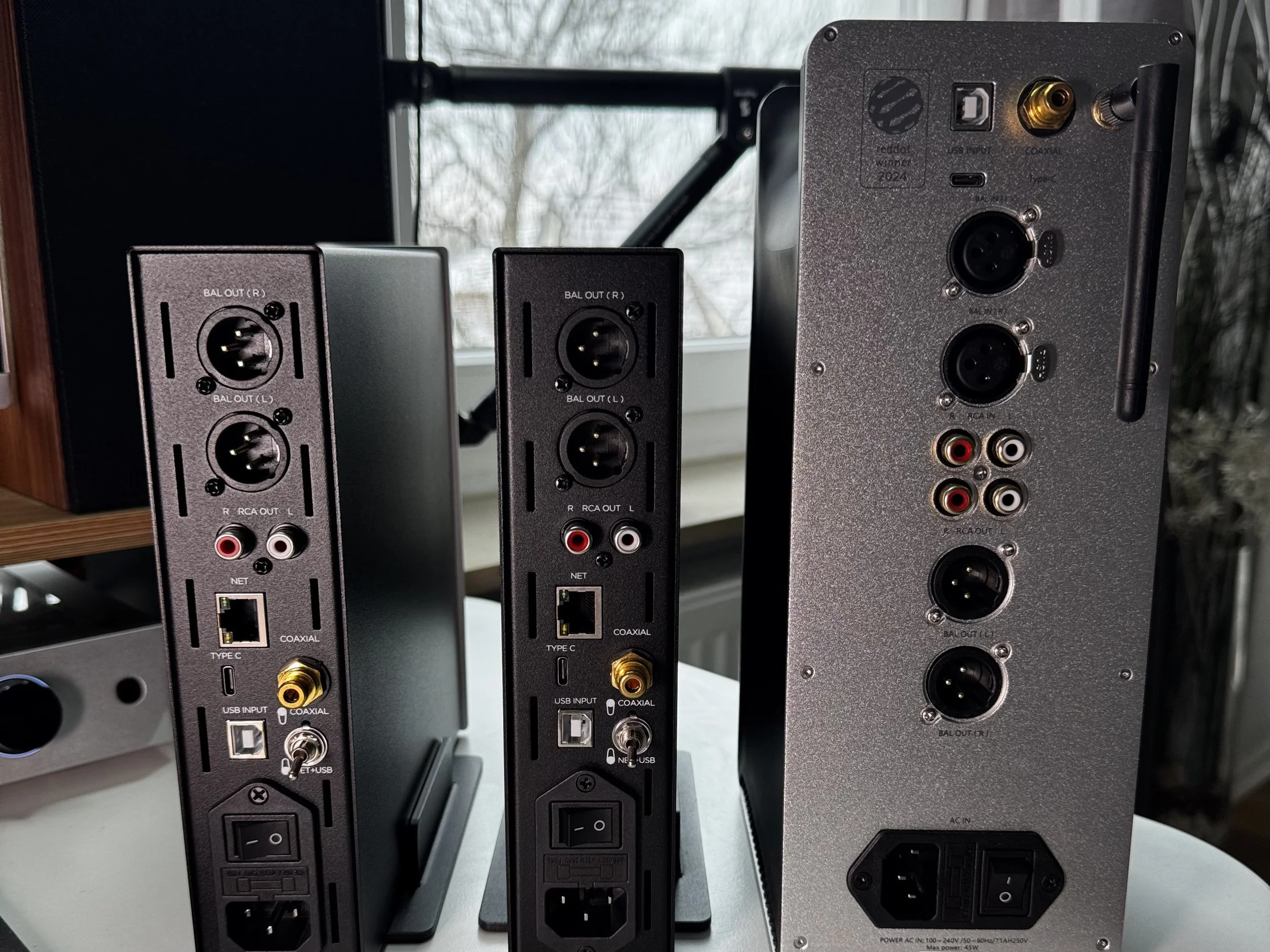
Moving to the rear panel the EF499 and EF500 are identical in terms of connectivity. Both offer the same rear I O with USB B inputs and a coaxial digital input and single ended and balanced outputs. They also include a network connection for multimedia streaming which is available only on these two models although I did not test it. It is also important to note that the EF499 and EF500 do not offer any analog input so you cannot use them with an external DAC and you are limited to their internal DAC only.
The EF600 is the only model that differs here and it offers expanded connectivity with additional digital and analog inputs including balanced connections. This allows it to function not only as a headphone amplifier but also as a DAC and a preamp within a larger audio system and it also gives you the option to use an external DAC. I tested this by feeding it from the Luxsin X9 and the difference was so subtle that in my opinion it is not worth spending extra money just to build this kind of setup. In practice I would simply use the excellent internal DAC and keep the system clean and straightforward.
It is also worth mentioning that the EF600 is the only model here offering high resolution Bluetooth which makes it the most versatile option if you want wireless playback without sacrificing too much sound quality.
Overall the I O and user interface across all three models are coherent and purposeful. There are some ergonomic details I would change but in terms of daily usability and system integration everything works logically and predictably.
Specs and Internal Technicalities
Starting with the EF600 this model uses HIFIMAN’s HYMALAYA Pro R two R DAC module which is the most advanced implementation in this lineup. Compared to the lower models it uses a higher precision ladder architecture and a more advanced processing stage and it is clearly positioned as the technical flagship. It also stands out as the only model offering high resolution Bluetooth support which adds extra flexibility for modern systems.
Moving to the EF500 this model uses the HYMALAYA LE R two R DAC which is a simplified version of the same ladder based concept used in the EF600. It sits in the middle of the range and aims for a strong balance between technical refinement and cost efficiency. Internally it is more refined than the EF499 but intentionally less complex than the EF600 which makes it a clear bridge between entry level and flagship.
The EF499 sits at the entry point of the lineup and uses a more basic R two R ladder DAC implementation without the HYMALAYA LE or Pro modules. The internal design is simpler and more cost conscious but it still follows the same core architecture and design philosophy as the higher models and it feels like a true part of the same family rather than a completely different product.
Internally all three units use a toroidal transformer and the EF600 steps up with a larger and more premium oxygen free copper toroidal transformer. In everyday use all three are extremely quiet and they run with virtually no audible noise or interference.

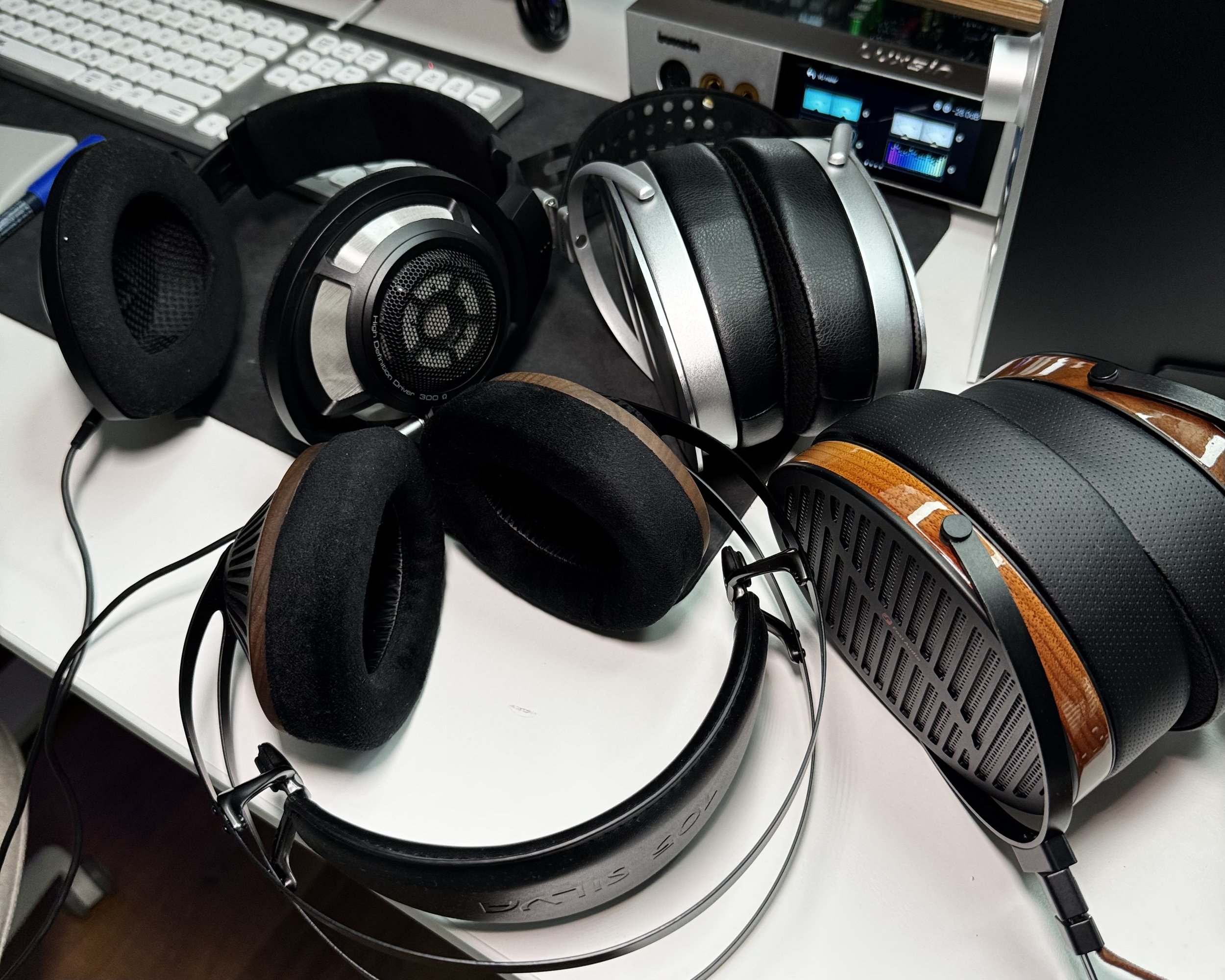
For this side by side comparison I did something a bit different. Instead of going deep into tonality and sound quality for each amplifier on its own, I chose four very different headphones and I tested each of them with all three amps to see how the pairing changes and how each unit performs in a real setup. The headphones I used were the HIFIMAN HE1000 Unveiled and the Sennheiser HD800S and the Fosi i5 and the Meze 105 Silva. This way the comparison stays focused on real world synergy and drive capability rather than just describing each amp in isolation and throughout the entire test my reference point was my Luxsin X9 which we reviewed recently on my YouTube channel.
EF600 Sound Quality
Lets start with the EF600. This amp is simply very capable at delivering power and engagement with any headphone and with basically any genre and it always feels in control.
With the HE1000 Unveiled the first thing you notice is how punchy and dynamic it sounds and it comes across effortless and explosivo when the track asks for it. What I really like here is the musicality and the sense of drive and at the same time you get a smooth midrange and generally clean treble which makes long listening sessions easy and enjoyable.
With the HD800S the EF600 surprised me because the sound is more full bodied and dense and bass drums have real punch and solidity and I almost did not feel the need for any PEQ. Instruments and vocals also feel larger in scale and the presentation is more direct with a slightly more forward midrange compared to my Luxsin X9 which tends to prioritize soundstage width and that big open presentation.
In terms of staging and imaging the EF600 is not chasing maximum width and instead it focuses on a strong center image and solid scale and a more upfront presentation. Bass is not only strong but also very controlled and fast and kick drums have a real start and stop which adds a lot to the sense of physical impact.
Detail and articulation are also excellent for this type of DAC technology and it never comes across as artificial. There is an analog feel to the presentation and it never sounds over treated or overly processed and you get a lot of information and texture without a sharp etched effect.
Even with the Fosi i5 which are not the easiest to drive the EF600 stays effortless with power on demand and the highs are never annoying. Even at higher volume it stays smooth and controlled and never gets sharp which makes it easy for long sessions. One practical thing to mention is that it gets loud very early on the volume pot so with sensitive headphones you need to be careful and I recommend using low gain when possible.
Compared to the Luxsin X9 I would say the EF600 has a bit less nuance and a bit less raw edge and it sounds smoother and in my setup more natural. The Luxsin X9 is still pitch black in terms of cleanliness and the EF600 gets extremely close which honestly I did not expect from this R two R DAC. Timbral precision is impeccable and that is one of the biggest surprises of this unit.
EF500 Sound Quality
Moving to the EF500 the first thing I noticed is how natural and neutral the overall tonality feels compared to the EF600. The midrange is not as forward and the presentation comes across a bit more relaxed and easygoing.
In the low end it is actually more fun than the EF600 as if it lets go a little more. It sounds creamier and more enjoyable and it has that slightly playful character that makes you want to keep listening. It is a bit less technical down low in terms of strict control and definition but it stays tasteful and it never turns into an exaggerated or boomy bass.
With the HD800S I did notice less overall body compared to the EF600 but I really appreciated the creaminess on vocals and the warmth in the low end. It makes the HD800S feel a bit more forgiving while still sounding natural and coherent.
As a DAC the EF500 is surprisingly close to the EF600. Honestly I had to do a lot of quick switching and go back again because the differences were not obvious at first. And that is important because it means that even though the EF500 uses a lower tier module on paper you might not notice it in real listening unless you do direct A B comparisons.
Power is also not an issue here. There is power to spare and it had no problem driving the Fosi i5. With the Meze 105 Silva it was very enjoyable and punchy but always natural and smooth.
Also do not forget that all three amps offer NOS and OS modes. Depending on the headphone and the track NOS can bring a bit more mid presence and warmth and OS can feel a bit more balanced and neutral and it is worth mentioning because you can tune the presentation slightly without using EQ. In my case I generally stuck to OS for most of the testing.
EF499 Sound Quality
And now the EF499 and here things get interesting because the tonality changes again and honestly it was not what I expected. The top end is brighter compared to the EF500 and the EF600 and that extra energy gives vocals and instruments a more airy and open presentation.
At the same time it can be more risky depending on the headphone and the track. With the HD800S for example some tracks were clearly more prone to sibilance and one very obvious example in my test was Hallelujah by Jeff Buckley where the HD800S became a bit fatiguing with the EF499.
What surprised me is that I expected the same issue with the Fosi i5 in the highs but it did not bother me there and I do not really know why. In fact the vibe was excellent and it was a lot of fun. You still get a ton of power and you get a very good grip in the bass and overall the pairing felt energetic and engaging.
If you love detail and openness on top the fact that the EF499 uses a more basic R two R DAC compared to the EF500 does not really make itself felt in an obvious way in terms of missing information. It is a different tuning choice and it is interesting and it is clearly not for everyone. And maybe that is exactly the point because it gives the EF499 its own personality instead of just being a cheaper version of the EF500.
Conclusion
What I learned from this side by side comparison is that all three amps have plenty of power for basically any headphone out there and also the more demanding ones. Power is not the limiting factor with any of these.
The EF600 comes very close to the technical performance of my reference headphone amplifier and it does it with a clear priority on musicality and smoothness and that big larger than life presentation where vocals and main instruments feel closer and bigger with a warm analog feel. Yes it has fewer functions compared to the Luxsin X9 but it also costs around half the price and for that reason it is a very easy recommendation and for me it is promoted with full marks.
The EF500 is probably my favourite in terms of value for money. Compared to the EF600 it offers a more neutral tonality and it does not have the same technical grip in the bass but it is more fun and more relaxed and in the mids and highs it is honestly so close that I had to switch back and forth to really catch the differences. For most real setups I think many people would not immediately notice the gap and that is why the EF500 is highly recommended.
When it comes to the EF499 what I can say is be a bit careful with pairing. The price is extremely appealing and 299 buks for this much power is genuinely attractive. At the same time the tuning is brighter up top compared to the other two and with certain headphones and certain tracks it can become sibilant. If you like a more open and airy top end and you do not have issues with energetic treble then the EF499 can be a very interesting and great value choice and it also gives you a different flavour instead of feeling like just a cheaper EF500.
EF600
Pros
Massive power and effortless drive even with demanding headphones
Very engaging and dynamic and still smooth and natural
Good detail and articulation without sounding artificial and with an analog feel
Strong bass control and impact and great grip
Only model with high resolution Bluetooth
Only model that can accept an external DAC and can work as DAC and preamp in a larger system
Cons
Volume knob has a bit of play and you noticed left channel only at zero until you turn it up slightly
Gets loud very early so volume range can feel sensitive with easy to drive headphones
No 4.4 mm Pentaconn output
Final score
9.0 out of 10
Best choice if you want the most complete feature set and maximum drive and a smooth musical presentation.
EF500
Pros
Very natural and neutral tonality and less forward mids than EF600
Bass is fun and creamy and enjoyable without exaggeration
DAC performance is very close to EF600 in real listening and you had to switch a lot to hear differences
Plenty of power and no issues with harder loads
Great pairing flexibility across your headphones
Cons
No analog input so you cannot use an external DAC
Final score
9.2 out of 10
Top recommendation for value for money and the sweet spot for most people.
EF499
Pros
Insane value for money for the amount of power
Very open and airy presentation with strong perceived detail in the top end
Very fun with the right pairing
If you like sparkle and openness you might not miss the higher DAC module at all
Still feels like part of the same product family
Cons
Brighter tuning up top than EF500 and EF600 and can get sibilant with some headphones and tracks
No analog input so you cannot use an external DAC
Not for everyone because of the treble energy
Final score
8 out of 10
Amazing deal if your headphones and taste match the brighter tuning and you want maximum power for minimal money.
Final ranking from this comparison
EF500 best value for money and closest to EF600 than expected
EF600 most complete and closest to your reference and most versatile
EF499 best budget powerhouse but needs careful pairing
